
Summit County Inmate Release Meaning
A Summit County Jail departure is an event, not a single legal outcome. A person may leave after bond, time served, dismissal, acquittal, a court order, or completion of a local sentence. Another departure can be a transfer to the Ohio Department of Rehabilitation and Correction, a different county, a federal authority, or immigration custody. Death also removes a name from active custody but is never a community release. The release disposition and destination matter because each route leads to a different official record.
Probation and community control are court supervision in the community. Parole and post-release control follow an Ohio prison term and are administered through the Adult Parole Authority. None of those terms means the person remains housed at the Summit County Jail. A discharge may mean physical departure from a facility, the end of supervision, or both, depending on the record. The exact agency label should be quoted before it is translated into plain language.
- Time served
- The court credits enough confinement to complete the jail term, subject to any other hold.
- Transfer
- One custodian delivers the person to another agency, so custody continues.
- Judicial release
- The sentencing court authorizes release from an Ohio prison to community supervision.
- Discharge
- An official end point whose scope depends on whether the record concerns custody, supervision, or both.
Summit County Release Paths
The quickest way to avoid a false conclusion is to map the departure type to the next custodian. Summit County jail paperwork supplies the physical exit and disposition. The charging court supplies the order or judgment. ODRC, BOP, or ICE supplies the next status when the jail delivered the person to another system.
- Bond
- The correct court clerk accepts the required payment or instrument, then sends paperwork to the jail. Verify the clerk entry and jail release record.
- Time served or dismissal
- A court resolves the local custody basis, though another hold may remain. Pair the journal entry with the jail disposition.
- Community control
- The person leaves custody under Summit Common Pleas supervision. The docket and Adult Probation hold the next records.
- ODRC transfer
- The county jail departure continues as state-prison custody. Compare the jail transfer entry with the ODRC admission.
- Federal or ICE transfer
- Custody continues with a federal or immigration agency. Use the receiving-agency locator and the court docket.
A release order is not the same as a completed exit. Other cases, warrants, and detainers can delay or redirect a departure. Use “released to the community” only when the physical release and destination support that wording.
Summit County Release Record Fields
Summit County does not publish a verified field schema for a stand-alone release report. The useful county record may be the release portion of a booking record, a jail history, a discharge entry, or pages produced by Records & ID. Ask for the named booking and describe the fields needed. That gives the custodian enough detail to identify responsive pages without claiming every field is maintained or public.
| Requested field | What it can establish |
|---|---|
| Full name and date of birth | Distinguishes people with similar names. |
| Booking or admission date | Connects the release to the correct custody episode. |
| Booking and case numbers | Links jail and court records. |
| Physical release date and time | Shows when county custody actually ended, if maintained. |
| Release code or disposition | Separates bond, time served, court order, transfer, and other outcomes. |
| Destination or receiving agency | Shows whether the person entered another custodian's control. |
| Booking photograph | Provides the releasable image tied to that booking, if retained. |
The court record adds the legal basis. Bond terms, dismissal, sentence, jail-time credit, judicial release, community control, and later termination entries can appear there. A court order proves authorization. The Summit County Jail release record proves when staff carried it out.
Request Summit County Release Records
The Summit County Sheriff Records & Reports page lists phone, mail, and in-person channels. The report-request form is a practical request vehicle, though the Sheriff does not promise a special release-record form. Its transaction line is 330-643-2176 at the jail, 205 East Crosier Street, on weekdays from 8:00 a.m. to 4:00 p.m. A separate official directory lists Records@sheriff.summitoh.net, 330-643-5545, and 53 University Avenue. Keep those contacts in their stated roles.
- Identify the person with full name, date of birth, and a booking or case number when known.
- Give a narrow booking and release date range. Ask for the booking/release record, physical release date and time, disposition, receiving agency, and releasable photo.
- Send the request through a listed Records & ID channel. Keep a copy and note when it was received.
- Ask the office to identify any withholding basis, redaction, retention issue, or fee before copies are produced.
- Compare the response with the correct court journal and any receiving-agency status.
The Sheriff's page lists ordinary copies at $0.10 per page, but no special release-record fee or deadline. Ask for an estimate before ordering. Under Ohio Revised Code 149.43, inspection must be prompt and copies must be made available within a reasonable period. Complexity, review, and redaction can affect timing.
The official records-channel screenshot shows the source used for these contact and copy details.
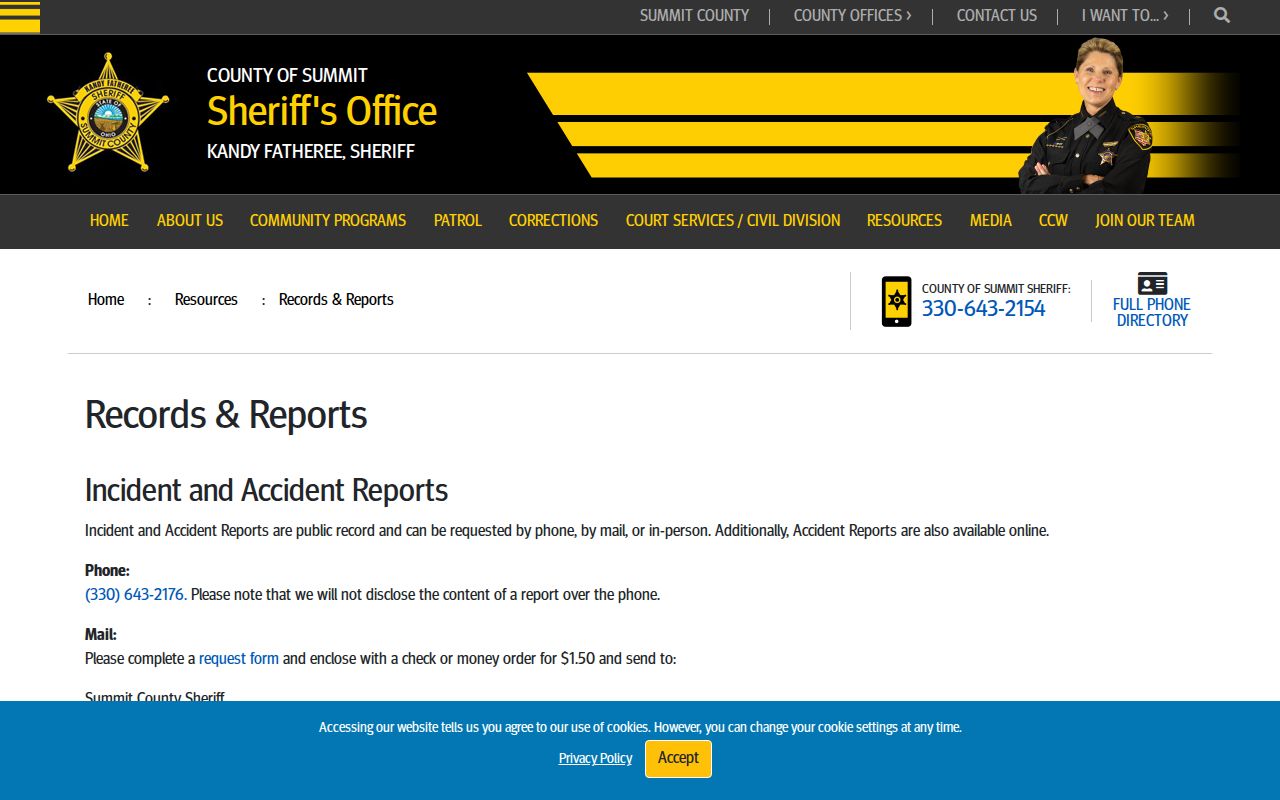
That office remains the direct route when no public historical release view exists.
Summit County Sealed Release Records
Ohio public-record access does not make every jail or court item open. Sealed records, protected personal data, juvenile matters, victim information, and other exempt material may be restricted. No verified Summit retention period was found for booking/release records or photographs. Ask whether the requested year's record remains, and ask which retention schedule or disposition applies if it does not.
Summit has a local sealing and expungement process through Common Pleas. The court's sealing instructions direct an applicant to obtain the proper motion, file it with the Clerk, pay the listed $50 fee, complete an Adult Probation investigation and interview, and attend a hearing. The law in effect at filing controls. Restricted online visibility after an order is not proof that the custody event never occurred.
When Summit County Releases Inmates
The Sheriff states that the Summit County Jail processes releases 24 hours a day, seven days a week. Morning court does not promise a morning exit. Release paperwork commonly reaches the jail in mid-afternoon, and the Sheriff estimates another two to three hours after staff receive it. That span is an estimate, not a deadline.
The Summit corrections FAQ documents the release timing and the division between court and jail work.
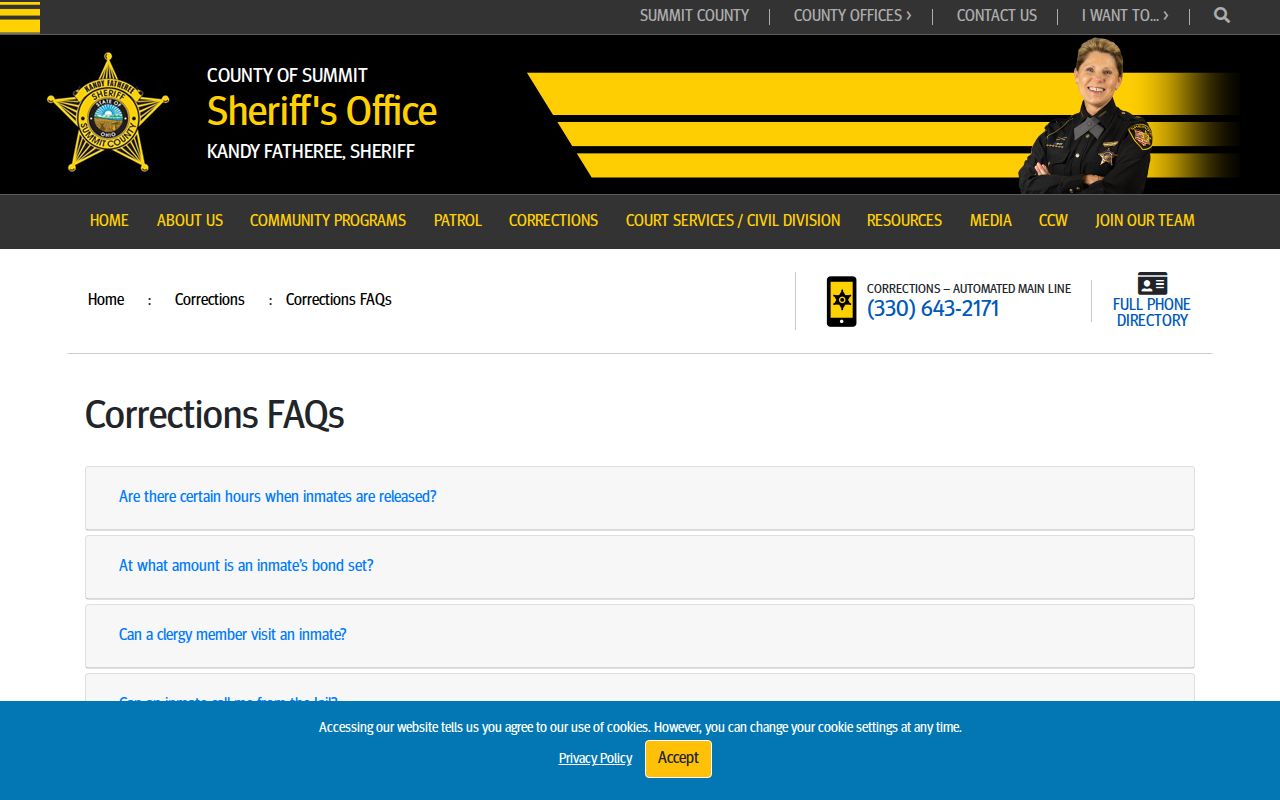
This timing explains why a morning ruling, bond entry, or receipt should be recorded as an earlier step, not as proof of physical release.
For a sound time note, record when the court entered its order, when the jail received it if available, and when the jail completed departure. Another hold can interrupt the sequence. If time is urgent, Corrections Registrar is listed at 330-643-2200 and Inmate Services at 330-643-2177 for operational direction.
Summit County Bond Release Timing
The Summit corrections FAQ confirms that the jail accepts no bond payments. Bond amount and payment belong to the clerk of the court with jurisdiction. Felony and misdemeanor cases may route to different clerks, so the charging court must be identified first. A receipt proves a court-side event. It does not prove the jail received or finished the release paperwork.
Verify three distinct events: the court set the bond and its terms, the correct clerk accepted the payment or instrument, and the jail received and processed the resulting order. A different case or agency hold can still prevent a community exit. The completed jail record supplies the physical departure time and disposition.
Note: use “bond posted” until jail staff confirm that Summit County custody has physically ended and no other hold controls.
Property After Summit County Release
The jail's third-party property process is narrower than release of a person's own property. The Sheriff says a third party may receive authorized property on weekdays from 8:00 to 11:00 a.m. Staff will not carry a request message into the jail, and identification cards are excluded from that third-party procedure.
Those rules should not be read as forfeiture of the released person's identification. They describe what another person can collect while the owner is confined. For an actual release, ask Inmate Services how personal property and identification will be returned, especially when a transfer rather than a community exit is possible.
Find Summit County Released Inmates
Summit's official web product is a Current Inmate Roster that redirects to an active-offender PDF. It is a present-custody source, not a release archive. The Sheriff's navigation and sitemap did not expose an official 24-hour or 72-hour release feed as of the research date. A missing name is only the start of a release inquiry.
- Identify whether the last known custodian was Summit County Jail, an Ohio prison, BOP, or ICE.
- Check the active county roster once. Record the date and time, but do not infer release from absence.
- Search the charging court for a journalized bond, dismissal, sentence, judicial release, or community-control entry.
- Request the county booking/release record to establish physical departure and destination.
- Search ODRC if a state-prison transfer or APA supervision is plausible. Use BOP or ICE only for their own systems.
- Use VINE for a person-specific custody change notice and confirm the event with its originating agency.
The Summit County 24-Hour Releases page focuses on the no-feed fallback for same-day events. A named-person inquiry still needs the full chain above.
Summit Release Records by Court
The Summit County court split changes where release authority appears. Common Pleas handles felony cases. Akron, Barberton, and Stow Municipal Courts handle much misdemeanor and traffic work, with some mayor's-court jurisdiction. An empty Common Pleas result does not settle a municipal case.
Search the correct clerk, then open the journal entry rather than relying on a schedule summary. Look for bond terms, dismissal, acquittal, sentence, jail-time credit, an ODRC commitment, judicial release, community control, revocation, or discharge. The court owns the legal order. The jail owns the physical Summit County departure. Their timestamps can differ without either record being wrong.
The Summit Clerk public docket is the verified felony-case access point.
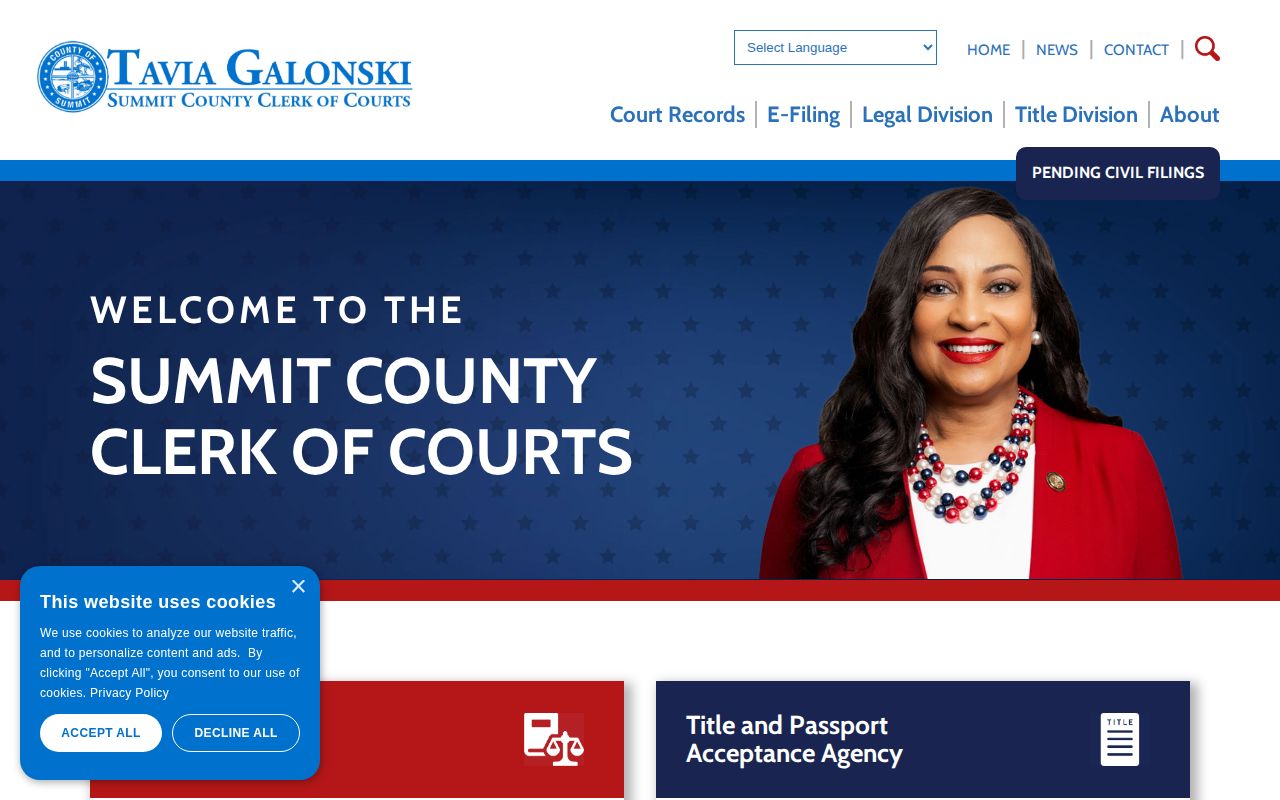
The docket supplies durable legal context even after a person has left the active jail roster.
ODRC Summit County Release Search
The ODRC Offender Search covers Ohio prison custody, released state offenders, judicial release, and Adult Parole Authority supervision. It does not cover every Summit County Jail discharge. Search by ODRC number when possible. Otherwise begin with last name and add first name only when needed. Compare the detail record before accepting a match.
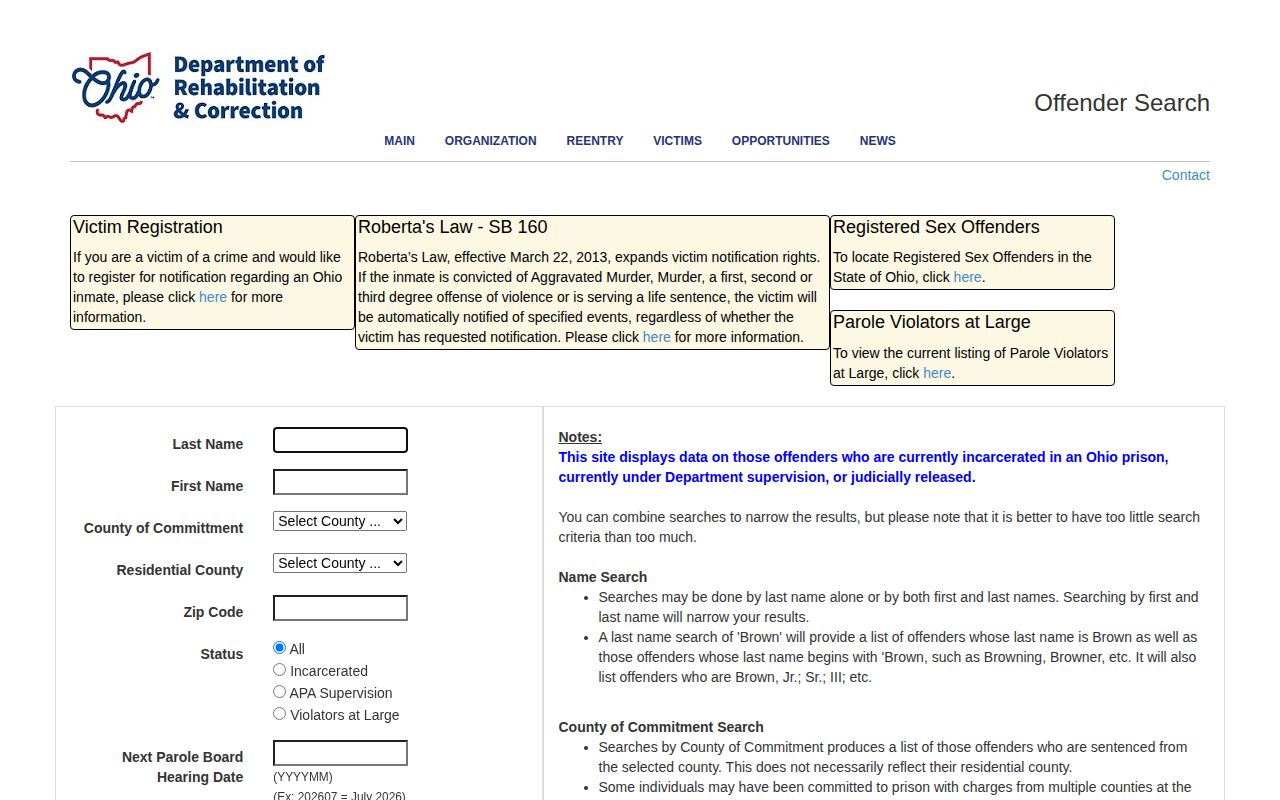
The official capture shows the state search fields and status choices used to separate current prison custody, release, and APA supervision.
| Search field | Use and limit |
|---|---|
| Last Name / First Name | Start broad, then compare identifiers in the detail. |
| Number | Use the A, R, or W prefix shown by ODRC. |
| County of Committment | Summit can indicate court origin, but concurrent cases may be indexed under the first reported county. |
| Residential County | Applies to APA and Violator at Large records, not all past releases. |
| Zip Code | Refines a search where the relevant state record supports that location field. |
| Status | Choices include Incarcerated, Released, APA Supervision, and Violators at Large. |
| Hearing month | Uses a year-month value for the next Parole Board hearing search. |
| Sort Results By | Changes result order, not the population covered by ODRC. |
Read status before dates. `APA SUPERVISION` supports a completed prison departure to state supervision. `RELEASED - Judicial Release` points back to a sentencing-court order. `Violator At Large` means a releasee is alleged to have left supervision and does not state a current location. `RELEASED - Death` is not a community return.
Expected release or parole eligibility is a forecast or eligibility marker. It is not proof of actual release. Stronger evidence includes a supervision start date, status, POA/PRD date, named APA office, and the Summit court order. State APA records must be kept separate from ordinary county probation.
Summit Judicial Release Verification
Summit Reentry Court creates a local record chain that can involve ODRC, Common Pleas, Adult Probation, and Oriana House. Judicial release begins with a sentencing-court order. ODRC may then show a released status, while the court and local program records describe community-control or residential placement.
Oriana House is a community-corrections and reentry provider, not a substitute for the county jail roster. A residential placement should not be described as ordinary jail custody or as complete freedom from supervision. Compare ODRC status, the judicial-release order, and the named supervision placement. Each answers a different part of the transition.
Summit Release Alerts and Transfers
VINELink provides a specific-person custody search and registration for available phone, email, SMS, or TTY notices in Ohio. Select Ohio, search by name or offender number, compare the facility and identifiers, and read the displayed status. If registration is offered for the matched record, choose a notice channel and complete confirmation. Telephone users create a four-digit PIN and enter it when VINE calls to acknowledge the message. Ohio warns users not to rely on VINE alone, since transmission can lag and a custody change can be a transfer.
The successful Summit VINE capture shows the Ohio search state used for a person-specific check.
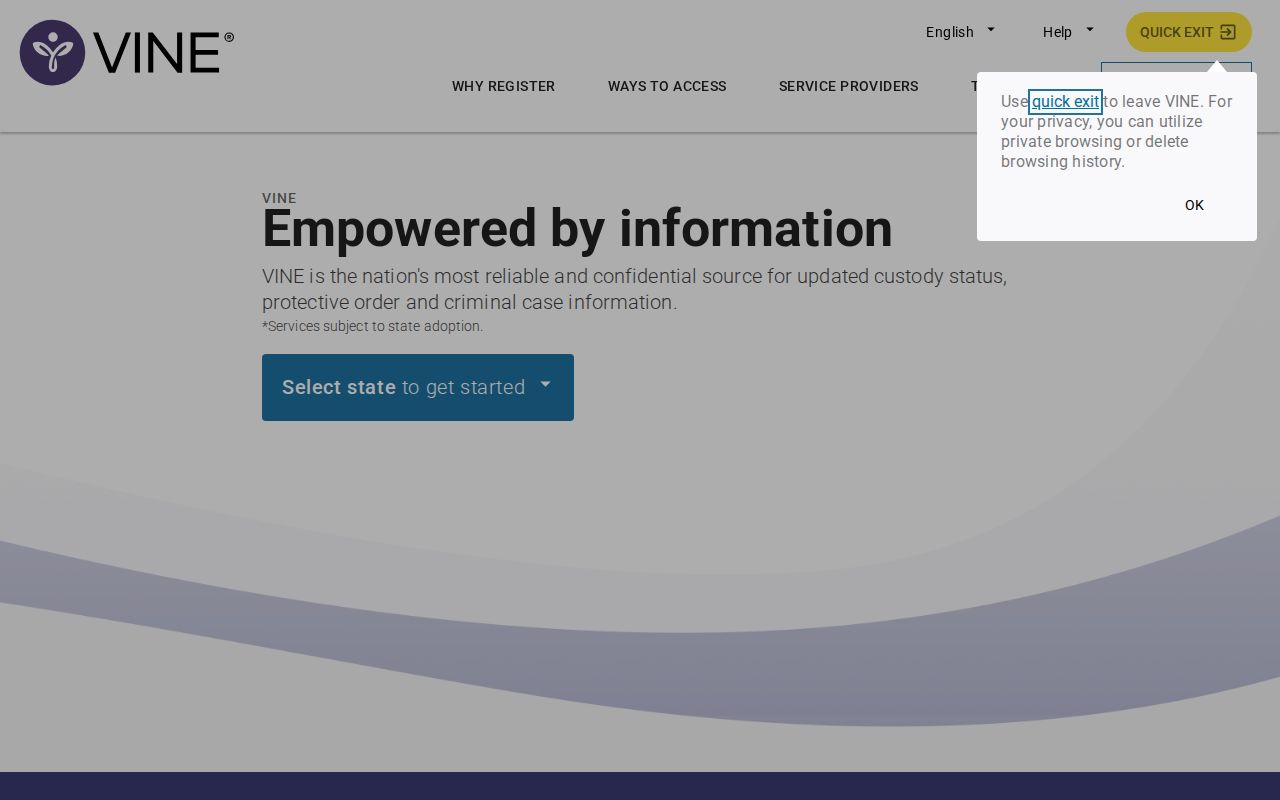
A VINE result should be saved with the time received and checked against the Summit County Jail, ODRC, the court, or a named receiving agency. It is not a rolling release list or an agency-certified release record.
For a federal case, use the BOP Inmate Locator. It accepts BOP, DCDC, FBI, or INS numbers, or a name with demographic refiners, and covers federal inmates from 1982 forward. A past release date with no facility, or `RELEASED`, means the person is no longer in BOP custody. It does not resolve state or local custody, federal supervised release, or another active case. Pair the locator with the federal docket.
The BOP capture demonstrates the federal locator and its released-record context.
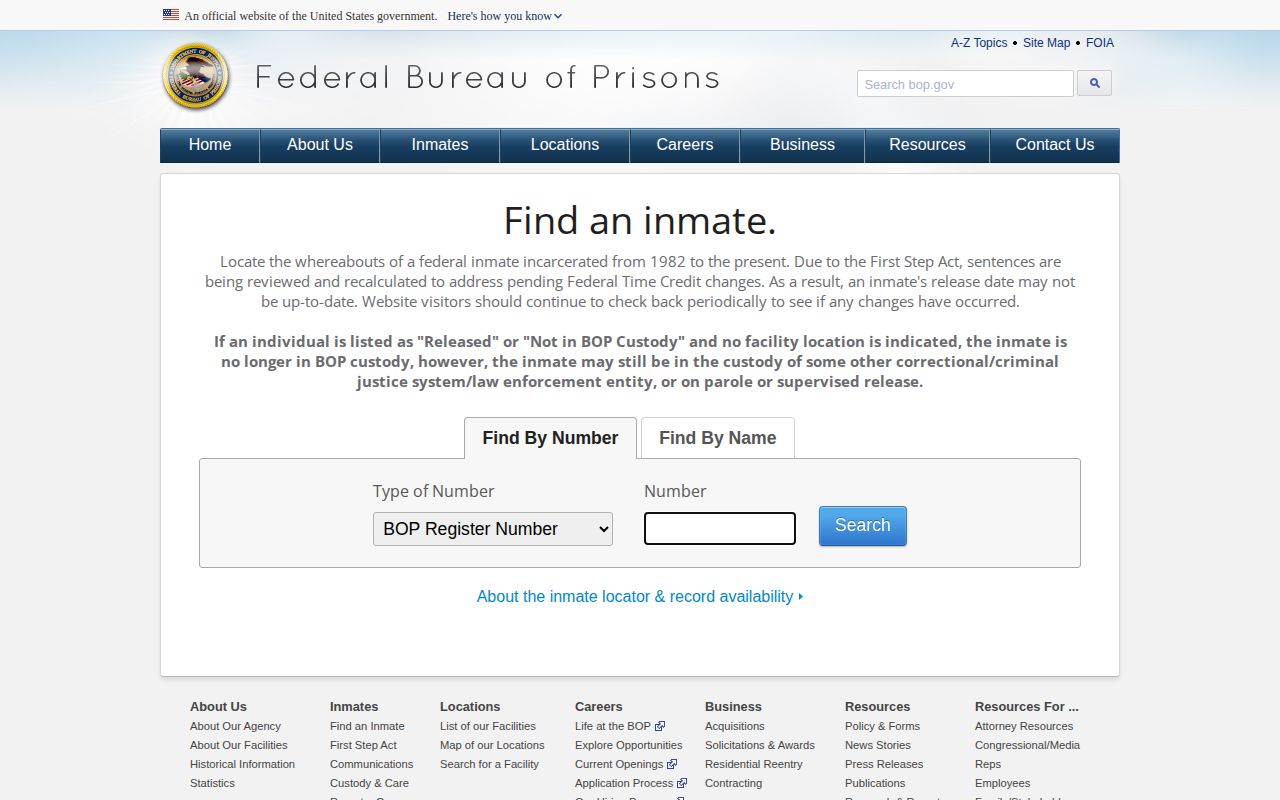
A Summit County Jail departure to the U.S. Marshals Service or BOP is a transfer, not a community release. No official public USMS historical release-status locator was found. Use the federal docket, BOP after commitment, and a focused USMS records inquiry. For pre-1982 BOP records, the agency directs researchers to the National Archives.
If the jail disposition names immigration custody, search the ICE Online Detainee Locator promptly. ODLS accepts a nine-digit A-number with country of birth, or exact name, birth information, and country. Its public window covers current detention and people released from ICE custody within the last 60 days. A no-result after that span cannot disprove older ICE custody, and the locator excludes people under 18.
Summit Post-Release Registry Limits
The Summit County Sheriff registry page connects to Ohio's electronic sex-offender registry and local compliance work. It is a specialized post-release source only for people with a legal registration duty. It is not a list of everyone released from Summit County Jail, an Ohio prison, or community supervision.
The successful Sheriff capture shows the local registry layer that must remain distinct from VINE and the jail roster.
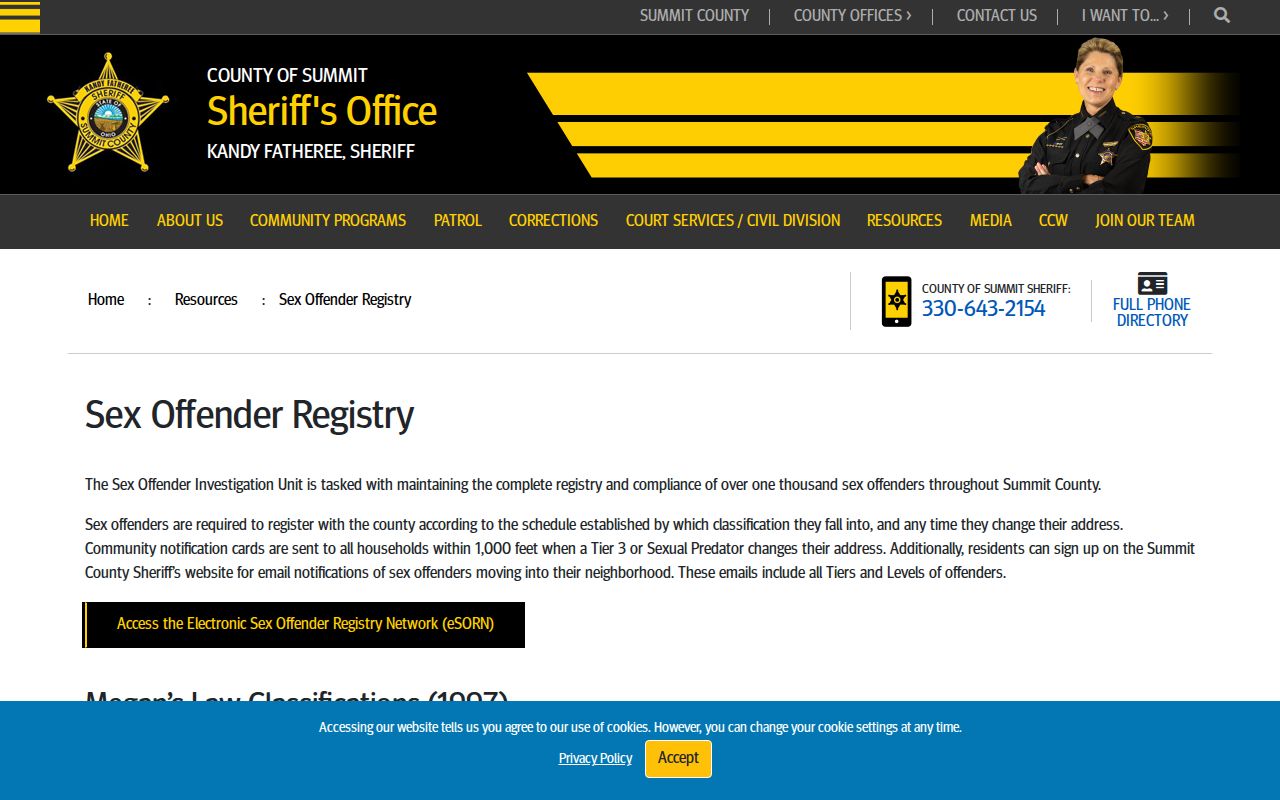
Use the registry when the specific person has a registration obligation and use its neighborhood email notices for that limited purpose. A registry no-result says nothing about an ordinary jail release. VINE remains the broader person-specific custody-notification tool documented by Ohio.
Summit Release Systems Compared
Custody databases do not share one meaning for “not found.” Each source covers its own population and time window. Use this comparison to select the next record, then preserve the exact status and check time.
| System | Still in custody | After release or transfer |
|---|---|---|
| Summit active roster | Presence supports current county-jail custody at publication time. | Absence does not distinguish release from transfer. |
| Summit release record | Not a live locator. | Can establish physical date, disposition, and receiving agency if maintained. |
| ODRC | Incarcerated status and institution cover Ohio prison custody. | Released, judicial-release, or APA status can document a state-system departure. |
| VINE | A matched record can supply custody status. | An alert can flag a change, but the originating agency should confirm it. |
| BOP | A facility result covers federal custody. | A past release date or RELEASED means no longer in BOP custody only. |
| ICE ODLS | Can cover current ICE detention. | Public coverage includes release from ICE custody within the prior 60 days. |
Federal release status does not settle state custody or federal supervised release. An ICE transfer is continuing agency custody, not release home. VINE does not replace BOP or ICE. A court order should be paired with the custodian's record when physical departure matters.
Summit County Jail Release Setting
The Sheriff's jail history says the Akron facility opened in August 1990 and expanded in May 1995. It lists current capacity at 671 and describes Summit County Jail as Ohio's first large county jail to use direct supervision. The jail operates continuously at 205 East Crosier Street.
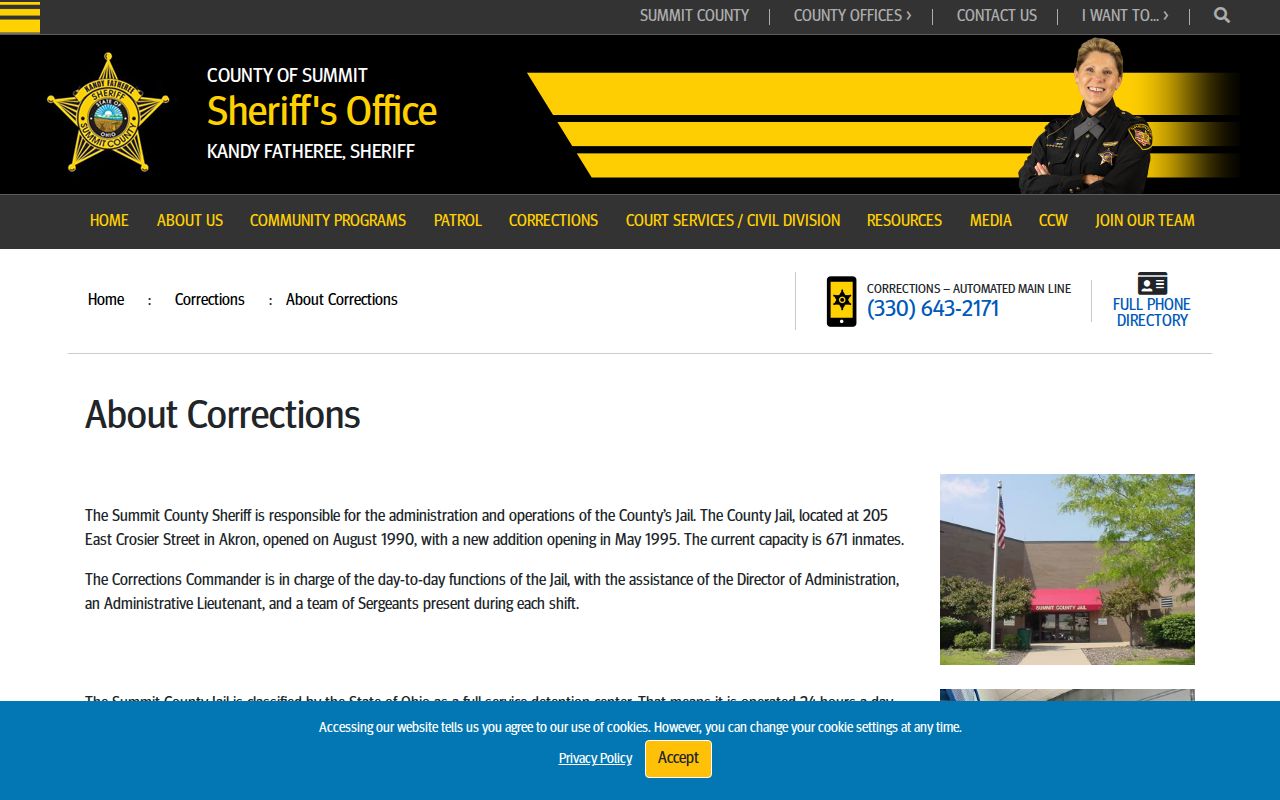
The facility capture ties those figures to the same jail that produces the active roster and physical release record.
The Summit County Jail release page gives the facility-specific lookup and records route. No adult state prison, federal prison, or ICE detention center was verified as physically located in Summit County. A Summit sentence can still lead to an institution elsewhere.
Check Summit County Release Records
Start with the last verified custodian, preserve the status and time checked, and confirm any departure through the agency record and the correct court.
Sponsored Results